



· By Monisha Dajee
What Is Propolis? The Ancient Bee Remedy Explained
Propolis - nature’s most potent remedy. A sacred, resinous treasure from honey bees which has been used for generations by various cultures and communities.
There is a reason propolis has been treasured for thousands of years by beekeepers, herbalists, healers and ancient civilisations. Often referred to as “BEE GLUE” or “THE HIVE’S EXTERNAL IMMUNE SYSTEM.” Propolis is one of nature’s most fascinating and intelligent creations - complex, aromatic, grounding, healing, powerful and connected to the land and honeybees.
Many people have heard the word propolis, but very few truly understand what it is, where it comes from, how bees make it, or why so many people now use it every single day as part of their wellness ritual.
At The Wild Bee Company, our propolis is harvested from our own UK hives, created by bees foraging across British trees, hedgerows, wild plants and seasonal blooms. This means our propolis carries the unique botanical fingerprint of the British landscape - rich in resins, plant compounds and natural protective properties gathered directly from UK forage.
The Ultimate guide to Propolis will explore:
-
What propolis actually is
-
Why bees make it
-
How humans have used it throughout history
-
The compounds and beneficial properties found within propolis
-
How to take propolis every day
-
The difference between propolis tincture and propolis suspension
-
How we harvest our propolis from our own hives
-
Why UK propolis is so special
-
Everyday ways to use propolis
-
How to make propolis part of your wellness ritual
-
How to learn more through our workshops
If you have ever wondered “What is propolis?” — this is the article for you.

What Is Propolis?
Propolis is a resinous substance created by honeybees using:
-
Tree sap and plant resins
-
Botanical gums
-
Bee enzymes
Bees gather sticky resins from tree buds, bark and plants - particularly from species such as:
-
Poplar
-
Birch
-
Horse chestnut
-
Pine
-
Willow
-
Alder
-
Conifers and resinous woodland plants
They then mix these resins with wax and enzymes to create propolis - a dark, aromatic substance used to protect and strengthen the hive.
The result is a dark, aromatic, resin-rich substance with a warm, herbal scent and incredibly complex chemistry.
The word propolis comes from the Greek:
-
Pro = in defence of
-
Polis = city
Meaning:
“Defender of the city.”
And that is exactly what propolis is to the bees.
In simple terms - Propolis is the protective immune system of the hive.
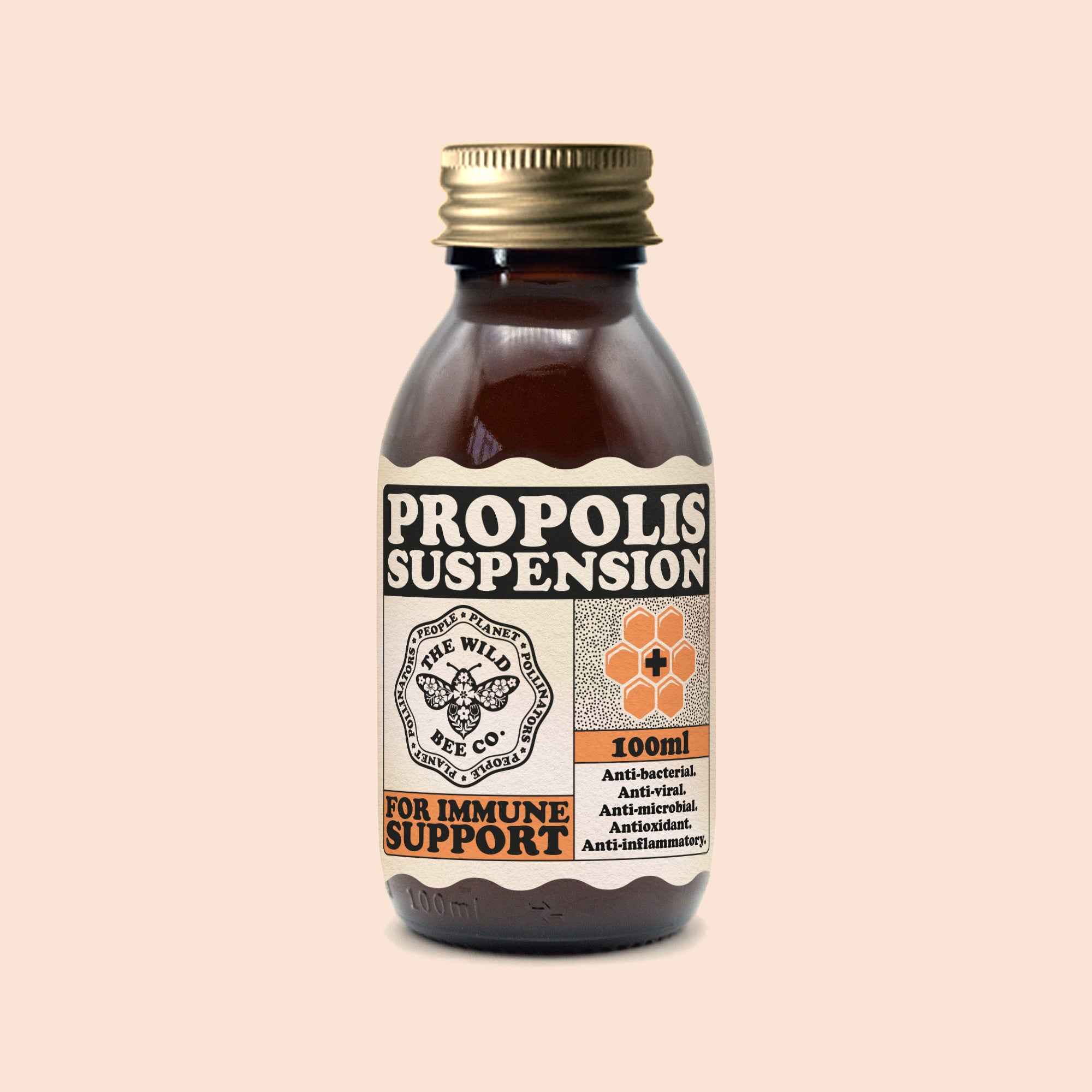
What is the difference between Propolis Tincture & Propolis Suspension?
Propolis Suspension combines the high potency of our tincture with the smooth flavour and mouth feel of our single source British honey. Our suspension also contains British bee pollen, which has a high content of antioxidants, vitamins, minerals, and other nutrients, which support various bodily functions, including boosting the immune system, reducing inflammation and potentially improving heart health.
Suspension Dosage:
1/2 Teaspoon twice a day
Suspension - Pure British Honey, British Propolis Extract 10% (Ethyl Alcohol, Raw Propolis 10:3 concentrate)
Propolis tincture -
Tincture Dosage:
2-3 drops into warm liquid. Repeat up to 3 times per day as required. May be used as a gargle when diluted. Not suitable for children.
Warning: Do not exceed stated dose
Tincture - 50% Pure British Propolis Extract in 100% Ethyl Alcohol.
Origin + Ingredients: Handcrafted in our studio.
Shop our immunity bundle here

Why Do Bees Make Propolis?
Honeybees are extraordinary architects and natural pharmacists. Propolis is part of the hive’s instinctive intelligence. Inside the hive, propolis serves many purposes:
1. To Sterilise & Protect the Hive
Bees coat the inside of the hive with propolis to help create a cleaner, more protected environment.
Researchers have found that propolis contributes to what scientists sometimes call “social immunity” within bee colonies. The hive is essentially lined with this antimicrobial resin coating.
2. To Seal Cracks & Strengthen the Hive
Bees use propolis like a natural caulk or sealant to close gaps and reinforce the hive structure. They coat the inside of the hive with it, seal small gaps, strengthen the structure and help defend the colony from unwanted microbes and intruders.
3. To Defend Against Invaders
If an unwanted intruder enters the hive and cannot be removed, bees may encase it in propolis to isolate it from the colony. This is one of the most astonishing behaviours in nature. I have come across several hives where the bees have stung a mouse to death after it entered their hive. If the mouse was to remain there, it would mould and bring disease to the hive. So the bee will propolise it, ensuring that bacteria of the decomposing mouse will not affect the health of the hive. The mouse will remain there indefinitely, unless a beekeeper comes along to remove it. Essentially, the mouse becomes mummified. Similarly, the acient Egyptians used propolis in their embalming practices.
4. To Create a Stable Internal Environment
Propolis helps regulate airflow, humidity and internal hive conditions.
It is a remarkable natural engineering material.
The History of Propolis: Ancient Medicine of the Hive
Humans have used propolis for thousands of years. Modern science is now catching up with what traditional cultures already understood intuitively. For generations, propolis has existed as potent folk medicine. Propolis is medicine for the people.
Long before modern medicine, folk medicine practitioners and past civilisations harnessed the power of propolis:
-
The Greeks used it to heal wounds and abscesses. The Greeks recognised its botanical potency long before modern science existed.
-
The Assyrians applied it to fight infections and speed up recovery
-
The Egyptians valued it so highly, they used it to preserve mummies for eternity and used it in ceremonial and preservation practices.
-
Roman armies reportedly carried propolis-based preparations to attend to their wounds.
No two batches of propolis are exactly the same. Its composition changes based on the trees and flowers the bees visit. Propolis has been used for centuries for:
-
Immune Support – A natural shield against seasonal threats
-
Skin + Wound Healing – Used for cuts, burns, and blemishes
-
Oral Health – its found in natural toothpastes & mouthwashes
-
Antimicrobial & Anti-Inflammatory Properties – Defending the body inside and out
-
In Traditional Chinese Medicine (TCM) – Chinese healers recognised propolis as a warming, antimicrobial remedy used to treat inflammation, infections, and digestive issues.
-
Indigenous communities in South America and Africa have used propolis for skin infections, insect bites, and respiratory relief for generations.
What Is Inside Propolis?
Propolis is incredibly complex. Scientists have identified hundreds of naturally occurring compounds within different types of propolis. However, what I love about propolis is that because the constitution is so complex, it's not something that can be artificially recreated in the lab.
Its exact composition changes depending on:
-
Geography
-
Environment
-
Trees and plants available
-
Season
-
Climate
-
Bee species
This means UK propolis is unique because it reflects British trees, British Honey bees, wild forage and seasonal biodiversity.

Propolis naturally contains:
Flavonoids
Specifically, propolis is rich in flavonoids, natural plant defences that shield the body from environmental stress and free radicals. Flavonoids are unique, valuable plant compounds found in herbs, flowers and trees.
Common flavonoids found in propolis may include:
-
Galangin
-
Pinocembrin
-
Quercetin
-
Chrysin
-
Kaempferol
Polyphenols
Naturally occurring antioxidant compounds gathered from plants and resins - the same disease-fighting antioxidants found in superfoods like green tea and dark berries.
Essential Oils
These contribute to the rich grounding scent and complexity of propolis.
Trace Minerals
Including naturally occurring minerals gathered through botanical sources.
Bee Enzymes
Added by the bees during the creation process.
Natural Resins & Plant Defences
Collected directly from tree buds and bark. Plants produce resins to protect themselves - bees selectively and intuitively gather these substances.
This is part of what makes propolis so extraordinary.

Why People Take Propolis Every Day
People increasingly use propolis as part of a daily wellness routine because it is:
-
Anti-bacterial
-
Anti- viral
-
Anti - microbial
-
Anti-inflammatory
-
Full of anti-oxidants
That's a lot of ‘antis!’ On top of that, propolis is:
-
Botanical and natural
-
Traditionally valued
-
A remedy for various ailments
-
Rich in plant compounds
-
Deeply connected to the bees, the land and our ancestors.
Over the past few years, our propolis has helped people in various ways. From chesty coughs and seasonal colds, to general improved wellbeing. I recommend anyone who has the beginning of a sore throat or cold, take a few drops of propolis tincture or a half a spoon of suspension, it will help your recovery progress. Personally for me, propolis helped balance my immune system. It also unexpectedly helped heal my acne! But remember, everyone is different.
Why Daily Use Matters
Consistency is important with natural rituals.
Rather than using propolis once in a while, we recommend incorporating it into everyday life in small amounts.
Daily use can become part of:
-
Morning rituals
-
Seasonal support
-
Winter wellness routines
-
Travel kits
-
Meditation and grounding rituals

Why Our British Propolis Is Different
The quality of propolis depends entirely on:
-
The environment
-
The trees available
-
Floral diversity
-
Hive health
-
Harvesting methods
At The Wild Bee Company, our propolis comes directly from our own UK hives.
That matters.
Our happy, healthy bees forage across British landscapes rich in:
-
Native trees
-
Hedgerows
-
Woodland resins
-
Wild plants
-
Seasonal forage
This creates a potent propolis with a distinctly British botanical profile.
Why UK Propolis Matters
British ecosystems contain unique seasonal forage.
Our bees gather resins from local trees and plants adapted to the UK climate.
This means our propolis contains the living signature of:
-
UK woodland
-
British hedgerows
-
Seasonal plant resins
It literally represents the diversity of the land the bees live on.
It is small-scale
Carefully harvested.
Not mass-produced.
Not imported anonymously.
Real propolis from real hives.
How We Gather Propolis From Our Hives
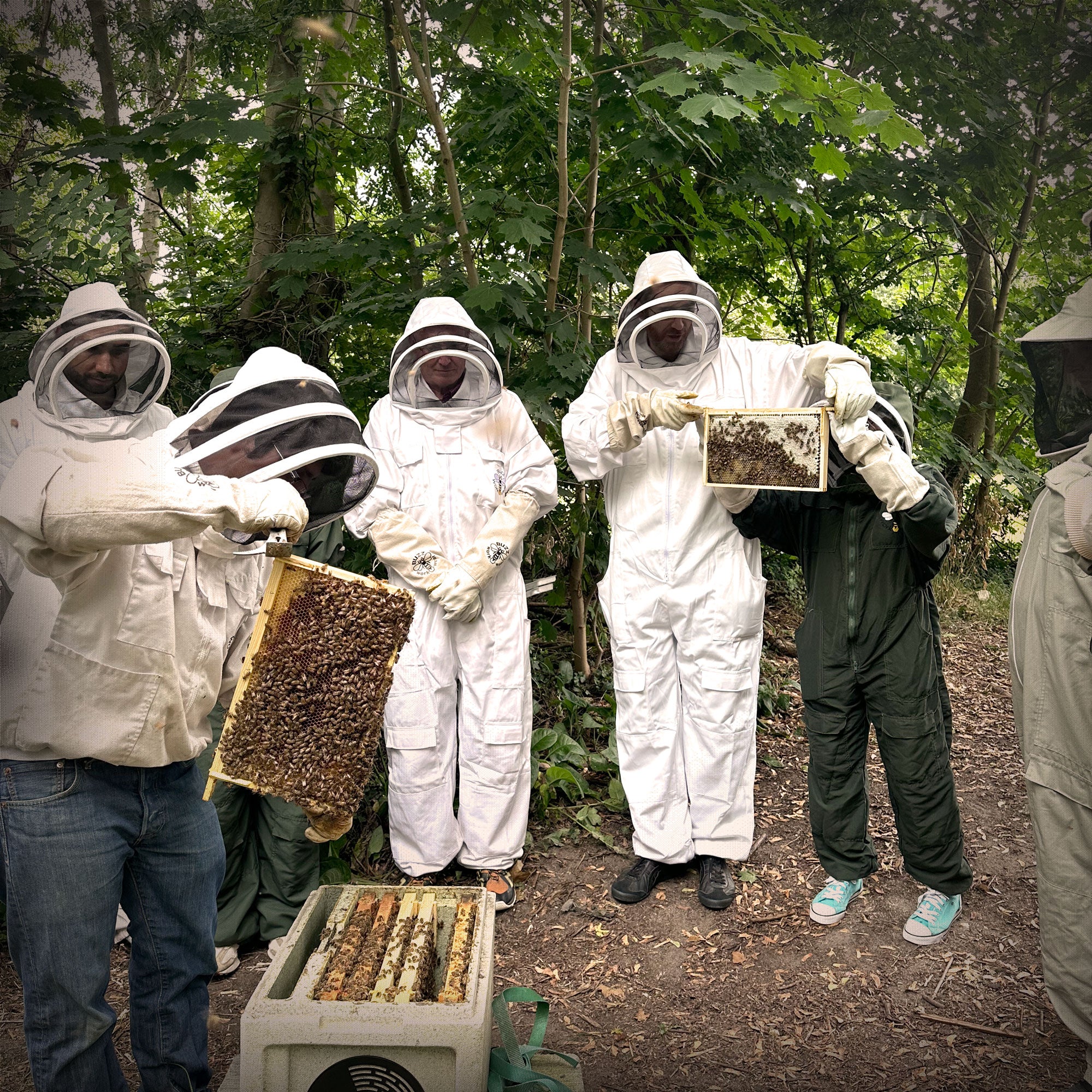
Harvesting propolis requires patience, care and respect for the bees. Its really sticky!!
Bees naturally deposit propolis throughout the hive.
We carefully gather excess propolis without disrupting colony wellbeing. Some hives are more ‘propolisy’ than others.
The raw propolis is then:
-
Cleaned carefully
-
Processed thoughtfully
-
Prepared in small batches
-
Crafted into potent tinctures and suspensions
We work in harmony with the rhythms of the hive and the seasons.
Everything begins with healthy bees and healthy ecosystems.
This is not industrial mass-produced propolis.
It is small-scale, beekeeper-produced, UK hive propolis.
What does propolis smell like?
Propolis Smells Like a Forest Apothecary.
No two propolis harvests smell exactly the same
Propolis often carries warm woody, herbal and resinous aromas from the trees it came from
Propolis Incense & Traditional Uses
Propolis has also traditionally been used in incense and aromatic preparations.
When gently warmed, propolis releases an incredible rich resin aroma - deep, forest-like, warming and grounding.
Propolis incense reduces mould in the home
If you would like to learn how to make your own propolis incense, you can join our Incense Making Workshop, where we explore traditional aromatic materials, sacred resins and bee-created ingredients.

Learn How to Make Your Own Propolis Tincture
Interested in learning more deeply about bee remedies and traditional preparations?
In our Magic of Bees Remedies Workshop, you can learn:
-
How to create your own propolis tincture
-
Traditional bee remedies
-
Bee-based wellness preparations
-
The deeper relationship between bees and plant medicine
It is a beautiful way to reconnect with ancient knowledge and practical beekeeping traditions.
Final Thoughts
Propolis is one of nature’s quiet masterpieces.
Created through the collaboration of bees, trees, plants and seasons, it reminds us that health and resilience are often rooted in connection - not only to ourselves, but to the natural world around us.
At The Wild Bee Company, we are proud to share propolis from our own UK hives, shaped by British forage, seasonal rhythms and the extraordinary work of the honeybee.
Whether you are discovering propolis for the first time or already love it, we hope this guide has helped you understand why this remarkable substance has been treasured for generations.
The wisdom of the hive is ancient.
And propolis is one of its greatest gifts.
Share:
0 comments
WILDCRAFTED - RECIPES, REMEDIES + RITUALS
-

HONEY FERMENTED GARLIC
Fermented garlic honey is a simple yet powerful remedy that combines the ancient art of fermentation to boost the medicinal powers of each ingredient. The origins of fermented honey spans through centuries and various healing practices found within multiple cultures.
-
GINGER BUG
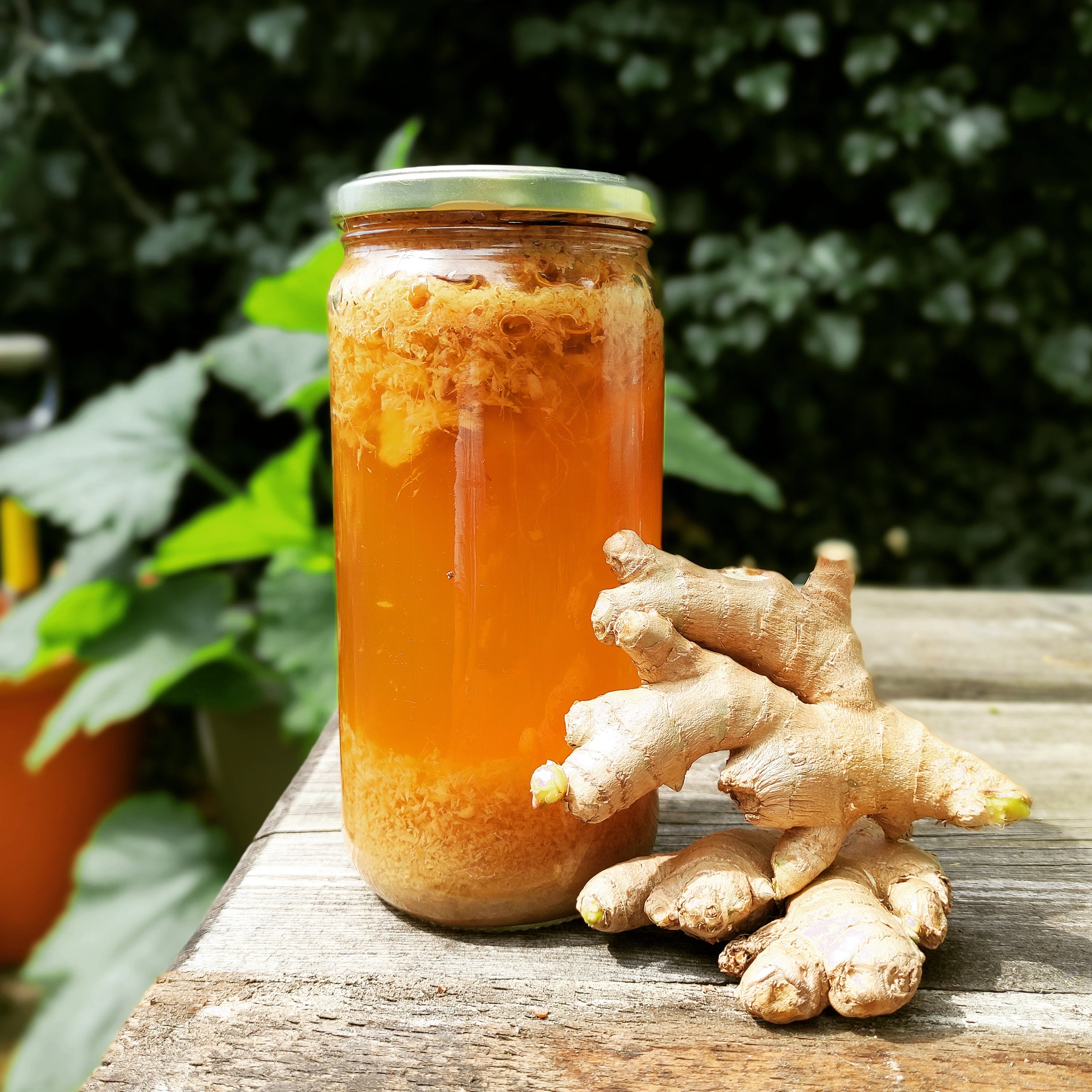
Our 5 year old ginger bug is still thriving. 🧡 This week we are preparing to make another batch of homemade, fermented ginger beer, perfect for those sweltering summer days ahead.•If you want to make a ginger beer the traditional...
-
ENCHANTING ELDERBERRY ELIXIR
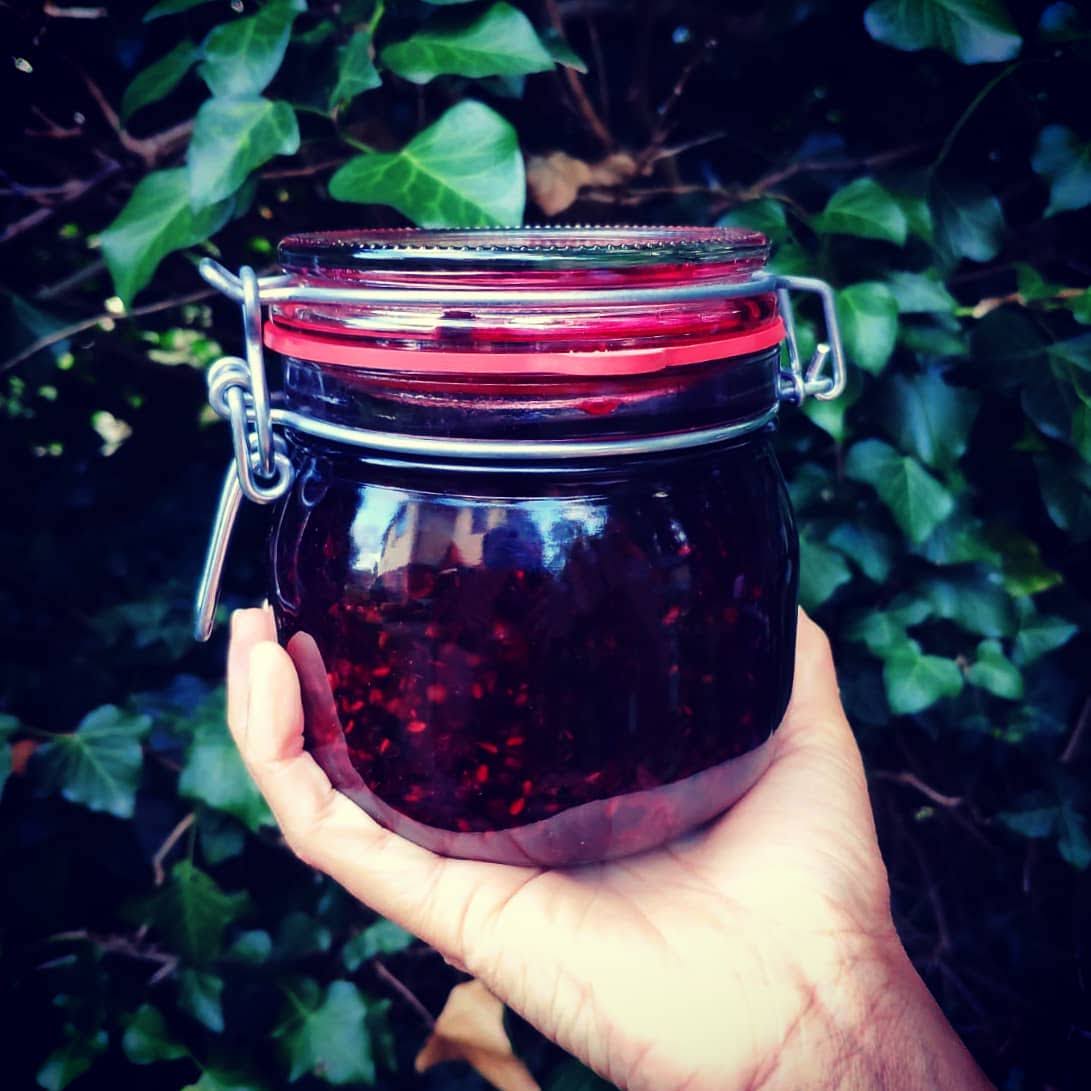
Her rich clusters of dark, purple berries, are ideal for tinctures and syrups to warn off those colds attempting to creep in this winter. She is truly a generous, magical plant with a plethora of medicinal uses.